Castle Guardians Clean Up, Study and Prepare Castle Pinckney for Archaeological Work
Nov. 8, 2025
Castle Guardians visited Castle Pinckney on Saturday, November 8 to clean-up the fort, study the historic structure, and begin preparing the site for archaeological work.
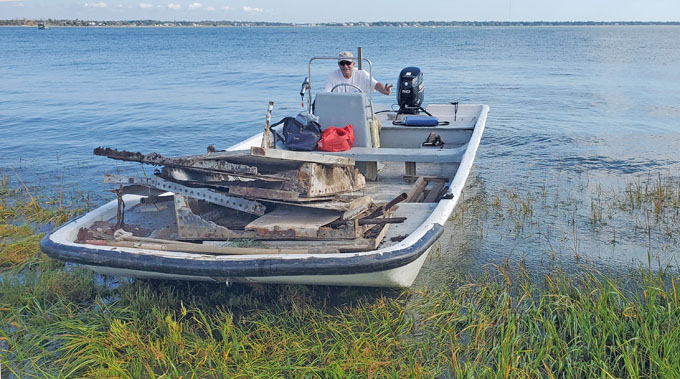
“We managed to remove almost the entire of pile of metal, rotten wood and other debris that had accumulated at the fort’s Sally Port (entrance) and within the fort over the past few years, and to properly dispose of it,” said Castle Guardian Leader Matthew Locke. “Under the supervision of archaeologist John Fisher, we began removing the remaining 20th century brickwork that had once blocked the castle’s entrance. We opened up the Sally Port, removed an old wooden step and replaced it with a new duckboard walkway to allow everyone ─ including volunteers, carrying equipment ─ to enter and exit the castle more safely whenever necessary to conduct excavation and conservation efforts.
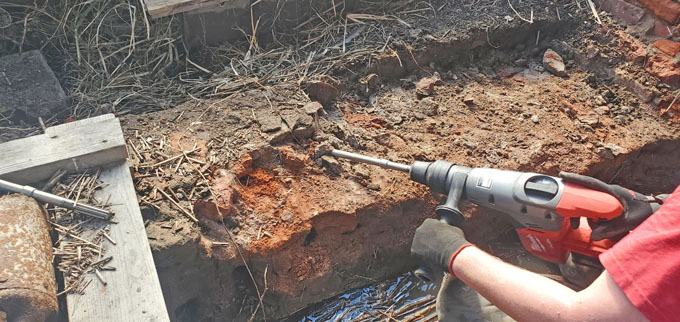
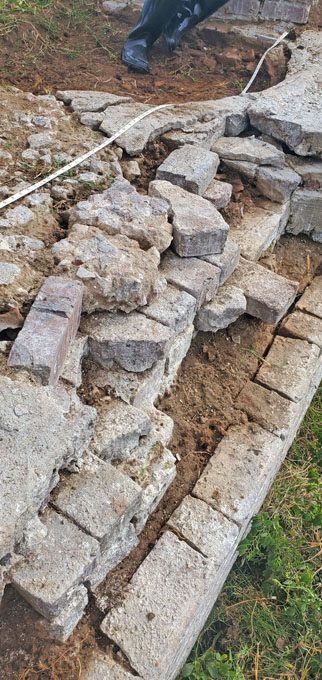
“We also conducted tests on the old warehouse concrete pad covering the fort’s interior but not directly over the casemates,” Locke added. “We wanted to test how a hammer drill would affect the Sallyport’s brickwork and the best way to break up the concrete pad.”
Castle Pinckney was used during the War between the States, abandoned and filled with sand by the end of the War and fell into disuse afterward. A light station and supply depot were built adjacent to fort in 1878. Several other buildings, including the lightkeeper’s house and the warehouse, were also built on top of the structure. The warehouse’s thick concrete pad, which still remains, covers the fort’s interior and everything that was buried in it at the end of the war.
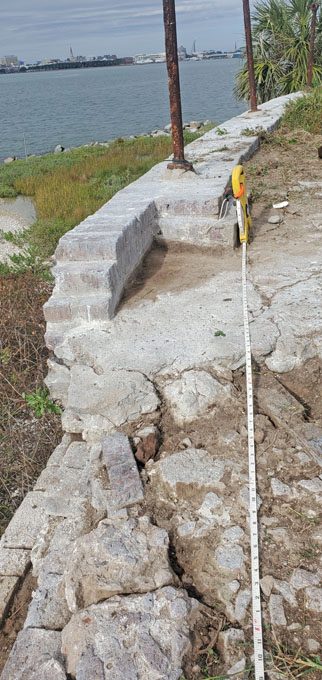
“We assessed the water level of the warehouse’s cistern tank, designed to capture rainfall for water at the site, and discovered that the cistern had filled-up again with water. So, we decided to drain the cistern’s tank later when we’re prepared to remove the cistern,” Locke said. “We then assessed the condition of the brickwork along the fort’s outer wall. Finally, we measured several areas in Castle Pinckney that will be excavated, including large excavation holes where large cannons are located. We’ll be using the measurements to construct protective coverings for the excavation sites once archaeological work begins.”
Castle Guardians took photographs and measured areas to be excavated, the sally port and the brickwork around the fort’s outer wall. Architectural experts will carefully study the condition of the fort (using the photos), and make recommendations for the fort’s conservation and preservation. Under the close supervision of John Fisher (the archaeologist), Locke will then lead Castle Guardians and others on many other trips to Shute’s Folly to facilitate their recommendations.
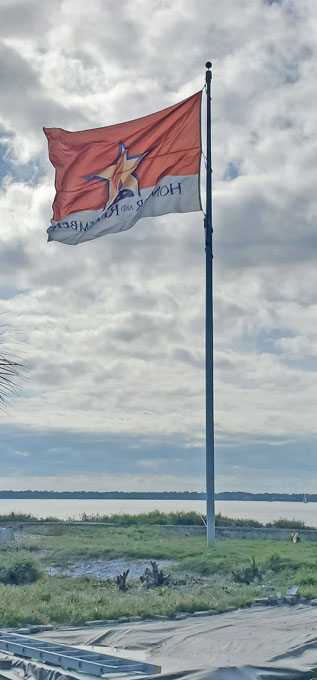
Castle Guardians lowered the Gadsden flag, which had flown over the fort for several weeks, and replaced it with the Honor and Remembrance flag to recognize Veterans Day after completing their work on Saturday. The flag is a visible public reminder to all Americans of the lives given to preserve freedom, and a national symbol of appreciation recognizing the sacrifice of generations of fallen hero families.
Castle Guardians, including Fisher, the archaeologist, then returned to the mainland around 1 p.m.
Locke credited John Fisher (the archaeologist), and Castle Guardians who helped on Saturday, including: Richard Moore and Yale Huett, who used their boats to transport everyone across the harbor to work at Castle Pinckney on Shute’s Folly and back to the mainland afterward; Tommy Salter, who used his boat to haul away hundreds of pounds of debris removed from the fort; John Fisher and Eric Caldwell for helping to load, unload and properly dispose of the debris; and Michelle Ruth and Nat Cabell, who used weed eaters and saws to remove plant growth so assessments of the fort’s sally port and brickwork could be made.
