
Scientists Visit Castle Pinckney to Conduct Initial Assessment
Archaeological Report: March 9, 2026
Charleston, S.C. ─ A team of scientists from Clemson University’s Warren Lasch Conservation Center (WLCC) visited Castle Pinckney on Monday, March 9 to study issues facing the historic fort on Shute’s Folly, a small island in Charleston Harbor.
Captain Lex Crawford transported the scientists and several Castle Pinckney Historical Preservation Society (CPHPS) board members and a committee chair, Matthew Locke, by boat to and from the site between 10 a.m. and 12:30 p.m.
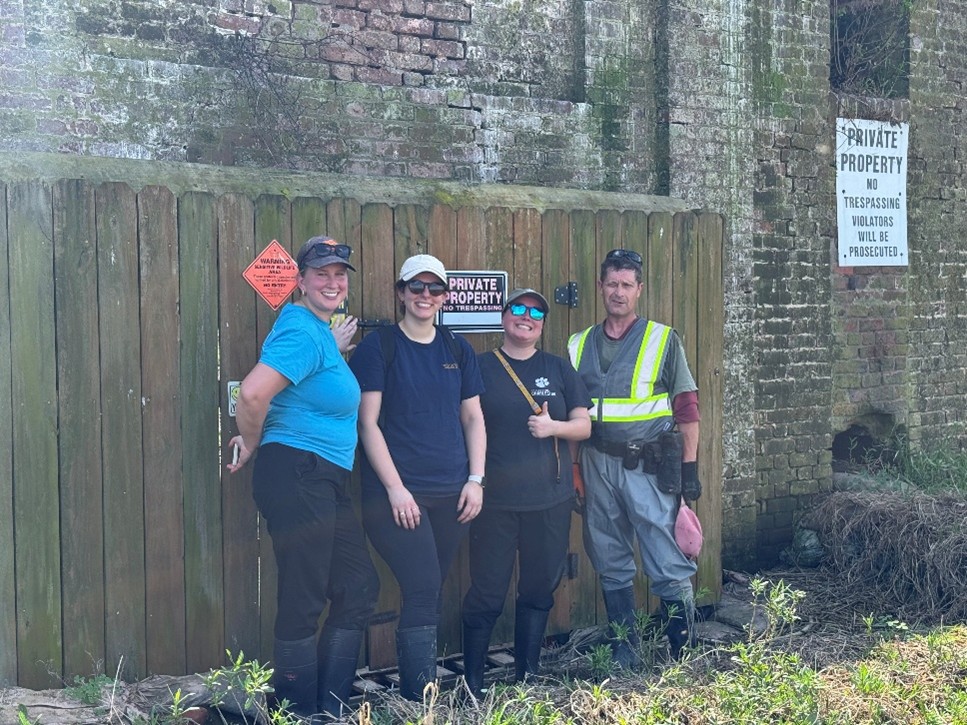
Castle Pinckney after the scientific team conducted its initial archaeological assessment. (Photo by John Fisher)
“The aim of the day’s trip was to conduct an initial assessment ─ to put some fresh eyes on Castle Pinckney and gather expert opinions on preservation issues facing the historic site,” said John Fisher, CPHPS preservation committee member and archaeologist, who led the site visit. “Specifically, we wanted the team from the Warren Lasch Conservation Center to look at the fort’s architectural issues and repair needs.”
WLCC scientists participating in the visit included conservation scientist Lisa Maria Arslaner, and historic preservation specialists Claire Achtyl and Patty Ploehn, who are exploring the feasibility of participating in future efforts to preserve and protect the fort. Also participating in the site visit was Locke, CPHPS preservation chair, who regularly leads volunteer Castle Guardians to the fort to maintain and protect it.
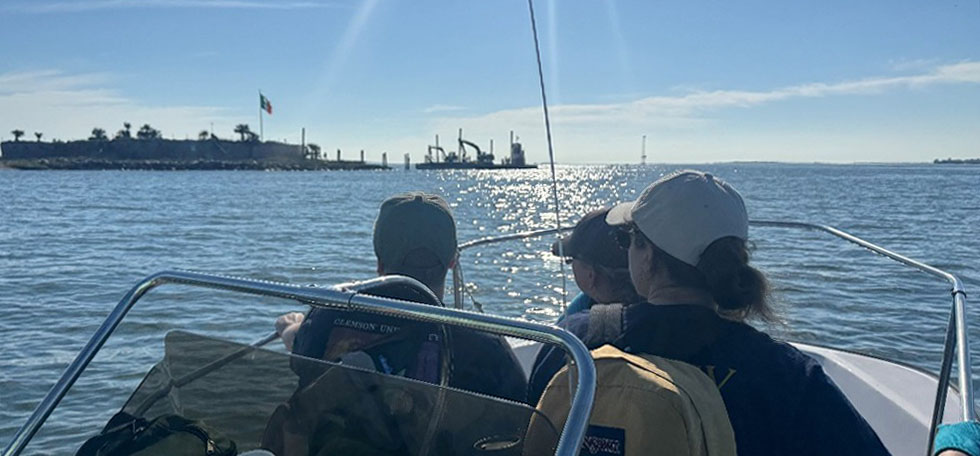
(Photo by John Fisher)
“As part of their initial assessment, historic preservationists Claire Achtyl and Patty Ploehn identified some problem areas and obtained study samples,” Fisher explained. “Some of the problem areas have been known for years, but some have rapidly degraded since excavation work began in 2019.”
He pointed-out other issues facing Castle Pinckney.
“Tons of sediment, used to reinforce the brick-and-mortar fort during the War Between the States (1861 – 65), were subsequently used to fill the fort’s interior following the war,” Fisher explained. “The pressure of that fill, which has caused some of the worst damage to the fort’s structure, will need to be slowly and carefully removed from the fort’s interior.”
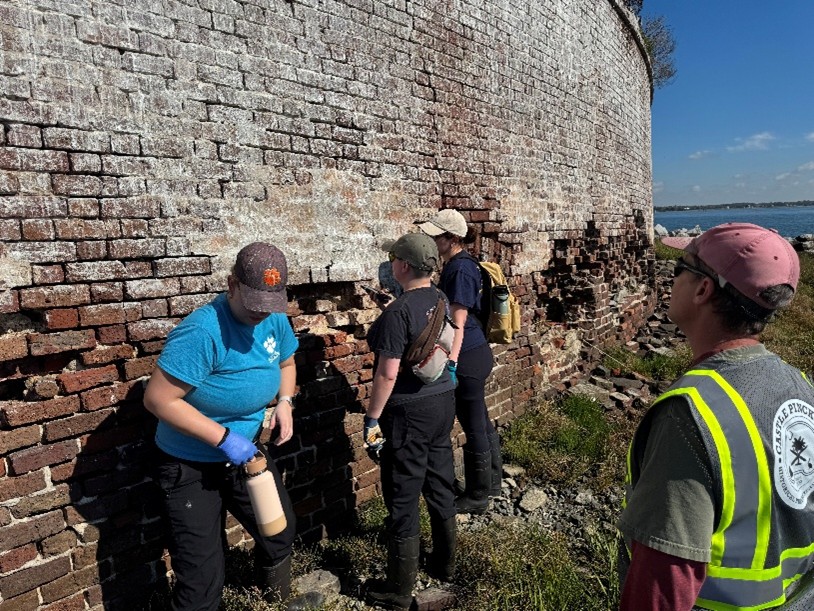
wall as CPHPS Preservation Chair Matthew Locke explains some of the fort’s history. Locke and Cliff Roberts co-authored
Holding CHARLESTON by the Bridle: Castle Pinckney and the Civil War (2024). (Photo by John Fisher)
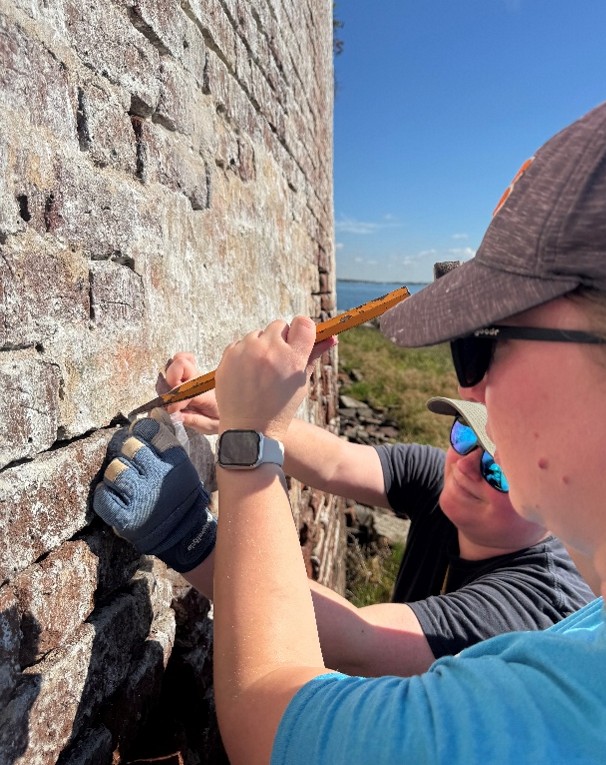
samples. The scientists later took the samples to the WLCC’s lab where they will be analyzed
and hopefully replicated to conduct future repairs. (Photo by John Fisher)
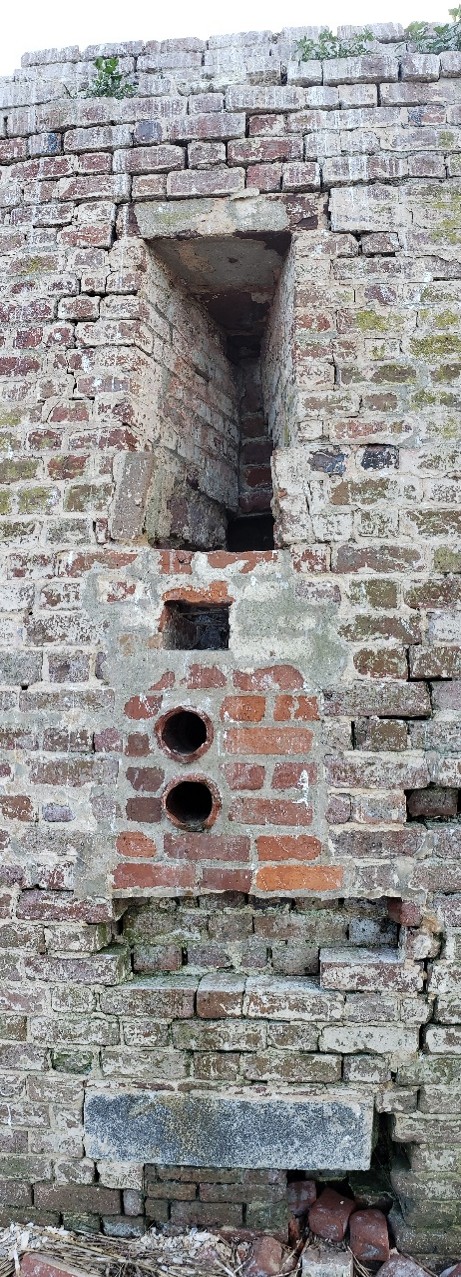
cement was used during the early 1900s to repair a section of the
structure’s brick-and-mortar wall, which was constructed during the
early 1800s. Although the repair work was well-intentioned, using the
wrong material can cause long-term damage to historic structures like
Castle Pinckney. CPHPS hopes to work with scientists, including those
at the WLCC, to properly preserve and protect the fort. (This photo was
taken by John Fisher on a visit to Castle Pinckney in 2019.)
CPHPS hopes to work with WLCC scientists to immediately address this problem, and other problem areas, and to develop a long-term plan to preserve and protect the entire fort.
“Lisa Arslaner, the conservation scientist, used a portable x-ray fluorescence device (PXRF) to test for chlorides and other contaminants on the objects and architectural sections that are in more dire need of conservation,” Fisher explained. “This will help WLCC scientists more accurately assess the level of work that will be required to develop and recommend an actual treatment method.”
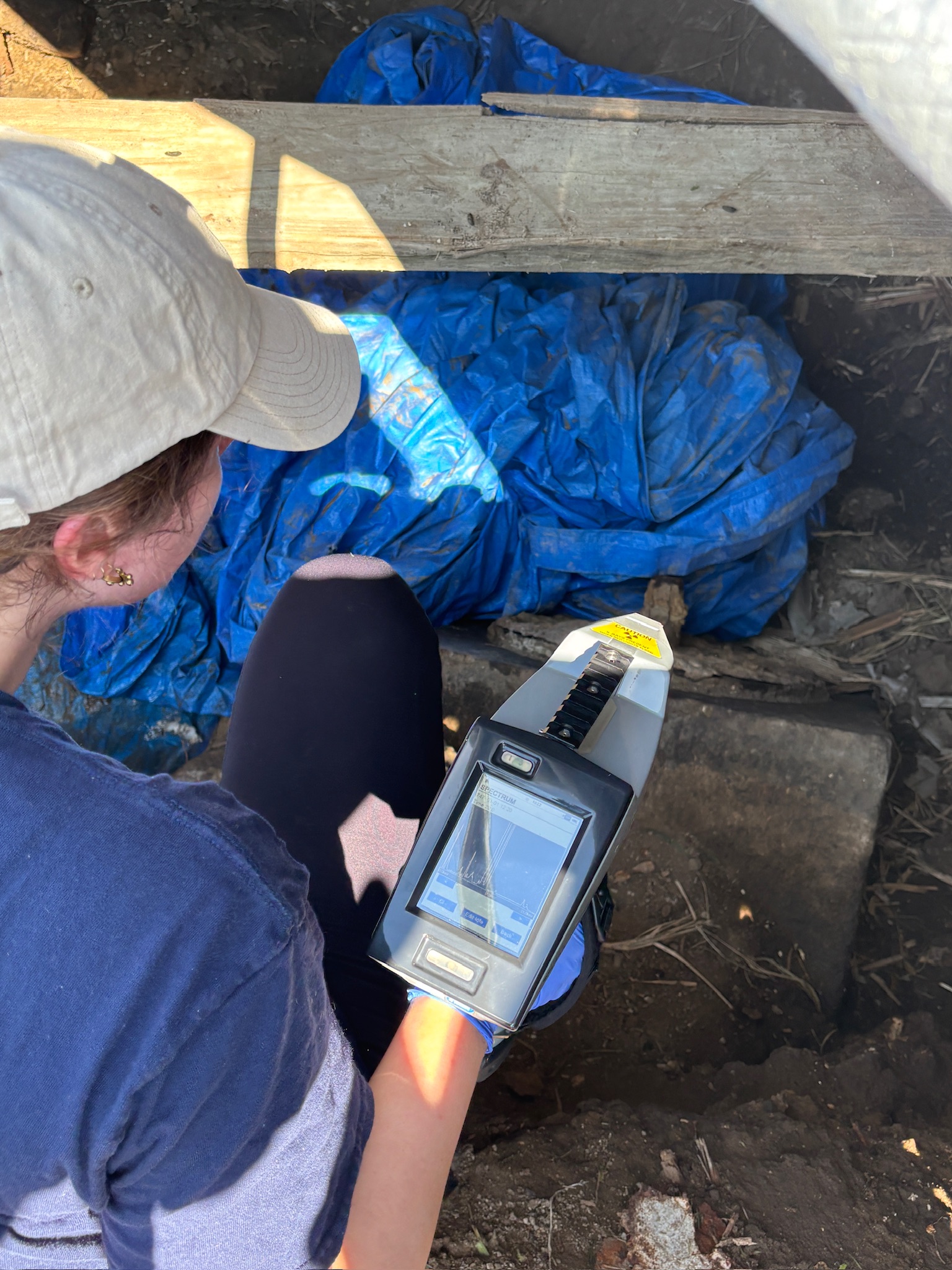
Some of the components selected for testing included portions of a possible original “stucco-like” plaster façade, various types and periods of brick and mortar, and possibly some of original whitewash paint that was used when the fort was painted white during the early to mid-19th century.
“Of significant importance were the mortar samples that the scientists obtained,” Fisher emphasized. “Any repair efforts will require the replication of period-correct mortar because the use and reapplication of other mortar could further destabilize the structure. In fact, we’ve already discovered that efforts to use modern brick and Portland cement during the early 1900s have caused additional damage to the fort’s original brickwork.”
This month (March), CPHPS began constructing a dock at Castle Pinckney ─ which does not touch the fort’s walls ─ to make it easier and safer to access the fort, and to maintain, study, preserve and protect the structure.
Since then, crews have been working around the clock to complete the dock as quickly as possible. In fact, as of March 14, almost all of the dock’s pilings have been installed. The original pilings, which have long since rotted, have already been removed.
This initial assessment of Castle Pinckney could kick-off long-term a long-term collaborative effort between the CPHPS and WLLC’s scientists. However, with limited funding available at this point, much more funding will be required to make the collaboration work.
“Dealing with everything from handmade early 19th century to Civil War and even early 20th century brick — each with its own unique challenges, not to mention the structural repairs –- will not be an easy task,” Fisher said. “Luckily, we believe we have experts here who are just a phone call away. So, we hope our efforts to preserve and protect Castle Pinckney will continue to grow.”
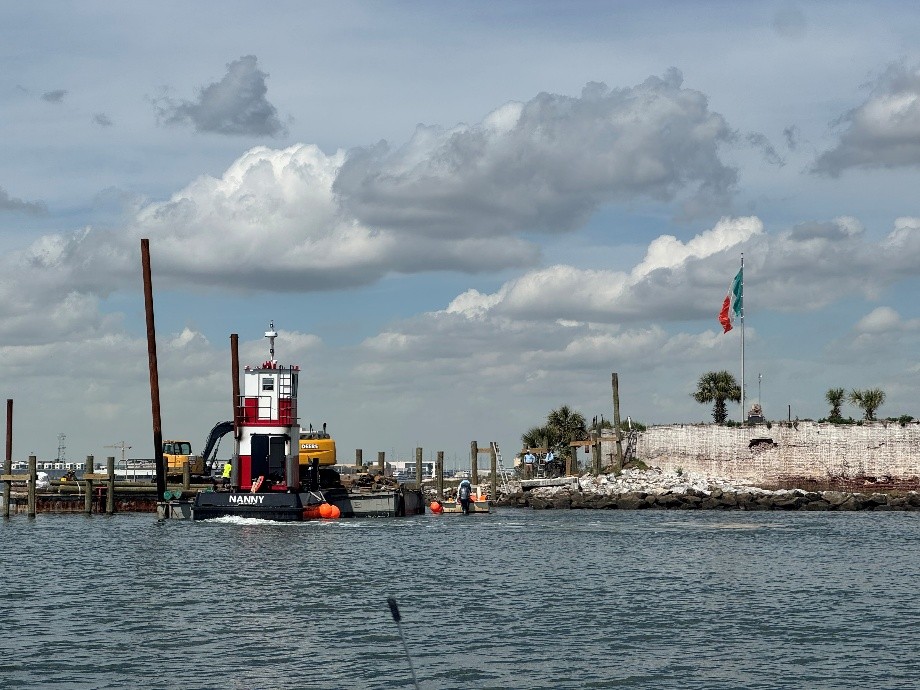
have been placed. The dock, which does not touch the historic fort’s brick-and-mortar walls, will make it easier and safer for CPHPS staff,
archaeologists and special guests to visit the site. (Photo by John Fisher)
CPHPS will need experts from a broad range of fields to study, and to help preserve and protect Castle Pinckney in the months ahead. At the same time, the Society plans to offer a wide range of educational opportunities associated with its effort.
“These are exciting times for Castle Pinckney and the CPHPS,” Fisher said. “Meanwhile, we especially want to thank our boat captain, Lex Crawford, and the scientists at The Warren Lasch Conservation Center and their director, Dr. Stephanie Crette, who made possible this initial assessment of the historic fort.”
